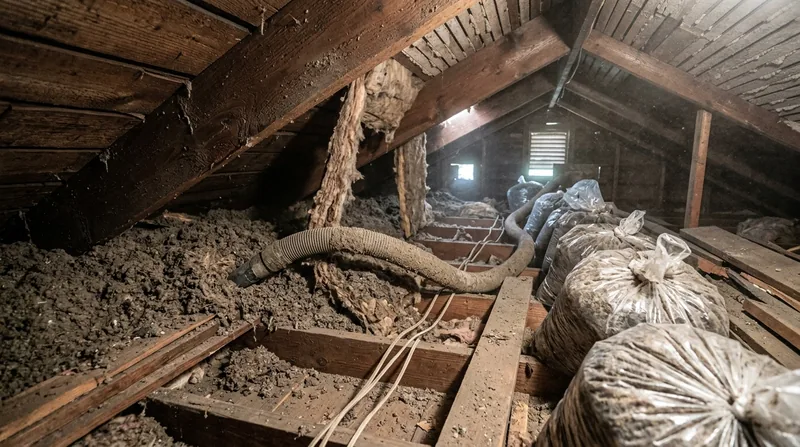




Durham's rolling Piedmont landscape is dominated by dense stands of oaks and loblolly pines, and almost every home built before 1980 sits above a vented crawl space on brick piers or a sloped daylight basement. Attics in these houses, and in the newer two-stories spreading through Cary, Apex, and Morrisville, typically hold decades of blown-in fiberglass, batts, or, in some cases, failed spray foam that was never installed correctly. Insulation removal in Durham is the essential first step before any new foam goes in, and it is also a standalone job when contamination, settling, or previous poor workmanship demands a clean slate. We remove old insulation, squirrel and raccoon debris, and failed foam that other contractors will not touch, so your home gets a sound substrate and honest new work. This page covers why removal matters in Durham's climate, how we do the work, what it costs, and what to look for when hiring.
Why Insulation Removal Matters in Durham's Humid Climate
Durham summers run long, hot, and humid, with attic temperatures climbing to 130 to 150 degrees Fahrenheit. Old fiberglass and batts settle and compress over time, losing R-value and creating thermal bridges where air leaks through gaps and around HVAC ductwork. Moisture from the humid climate migrates into vented attics and crawl spaces, and when blown-in insulation gets wet or contaminated by rodent urine and feces, it becomes a liability rather than an asset. Removing the old insulation completely, not just adding new foam on top of it, ensures proper contact with the deck, correct thickness measurement, and a clean, dry substrate before any new work begins.
- We vacuum out all old blown-in fiberglass, cellulose, and mineral wool before foam application so the new layer bonds properly to the deck.
- We remove contaminated insulation where rodents or moisture have compromised its integrity, which is common in Durham's pre-1960 Craftsman and mill-house stock.
- We cut out and haul away failed spray foam jobs from previous contractors, a job most installers refuse to do but we perform regularly.
- We identify vermiculite insulation and flag it for professional testing rather than disturb it, following the precaution required by federal guidance.
- We dispose of all removed material responsibly and leave the space clean and ready for new foam installation or other air-sealing work.
A proper removal job is the difference between a retrofit that holds its performance for decades and one that fails within a few years because the substrate was never prepared correctly.
Key info: Old blown-in insulation in Durham attics often sits on top of original wood sheathing or kraft-faced batts that have absorbed humidity from decades of vented attic exposure. Removing it completely reveals moisture damage, air leaks, and structural issues that must be addressed before any new insulation goes in. In homes built in the 1920s through 1960s around Trinity Park, Old West Durham, and Watts-Hillandale, this step is almost always necessary.
For more on what comes after removal, see our attic spray foam insulation service page.
North Carolina's building code and the local Durham building department govern what constitutes proper insulation work, including substrate preparation and ventilation requirements. You can verify permit and contractor registration requirements at the City of Durham Planning and Development Services office.
How We Remove Old Insulation: Step-by-Step Process
Insulation removal is more than hauling bags out of an attic. We use industrial-grade vacuum equipment to capture debris safely, we inspect the substrate for damage and moisture, and we document what we find so you understand the scope of any follow-up work. The process is straightforward but requires attention to detail and proper containment to keep dust and contaminants out of living spaces.
- We seal off the attic or crawl space from the living area using plastic sheeting and tape to prevent dust and odors from migrating downward during removal.
- We set up negative pressure ventilation or exhaust fans to capture airborne fibers and particles, protecting both the work area and the surrounding home.
- We vacuum out all old insulation material using truck-mounted or portable HEPA-filtered equipment, working systematically across the entire space.
- We inspect the exposed deck, rim joists, and structural members for moisture damage, rot, or pest contamination and document findings in writing.
- We remove any netting, vapor barriers, or fastening materials left behind by previous work so the surface is completely clear.
- We dispose of all removed material in accordance with local regulations and haul the space clean and ready for the next phase.
This methodical approach ensures that the new foam or insulation you install afterward will perform as designed and last for decades.
Local example: A 1950s brick ranch in Chapel Hill had 12 inches of compressed fiberglass over the original attic deck, plus a layer of blown-in cellulose added in the 1990s. Squirrels had nested in the insulation for years, and the fiberglass was matted and wet in the north-facing eaves. We removed all of it, revealed ice-dam damage along the roof line and a missing soffit vent, and prepared the deck for closed-cell foam that would seal and insulate in a single step.
See our closed-cell spray foam page for details on what comes next after removal.
Removal Methods and When to Use Each
| Approach | Description | Best for |
|---|---|---|
| Vacuum removal with containment | Truck-mounted or portable HEPA vacuum with plastic sealing and negative pressure ventilation to capture all airborne material. | Standard attic and crawl space removal where old blown-in or batt insulation must be cleanly extracted without dust migration. |
| Manual removal and bagging | Hand removal of insulation into heavy-duty bags when access is tight or when selective removal of only contaminated sections is required. | Spot removal in crawl spaces with low headroom, or when only portions of the attic need clearing before new foam. |
| Failed foam removal | Cutting out and hauling away spray foam that was installed incorrectly, has delaminated, or is blocking ventilation or access. | Remediation of previous spray foam jobs that failed due to poor installation, wrong product choice, or substrate issues. |
| Vermiculite identification and flagging | Visual inspection and documentation of potential vermiculite insulation; never disturbed, flagged for professional asbestos testing if removal is needed later. | Older Durham homes built before 1980 where mineral-based insulation may be present and could contain asbestos. |
Insulation Removal Cost in Durham: What to Expect
The cost of insulation removal in Durham depends on the size of the space, the type and depth of insulation, accessibility, and whether contamination is present. Most residential attic removals start at $950 and scale up based on square footage and complexity. A small attic with 800 square feet of settled fiberglass may fall at the lower end, while a large two-story home with 2,000 square feet of attic space, crawl space insulation, and rodent contamination will cost more. We provide written estimates with specific square footage, removal method, and disposal cost itemized so you know exactly what you are paying for.
Factors that increase removal cost include restricted access (small attic hatches or crawl space entries), high contamination levels requiring extra containment and ventilation, failed spray foam that must be cut and hauled in sections, and the need to address moisture or structural damage discovered during the removal. We do not charge by the board foot for removal work, but we do charge for labor, equipment, containment materials, and disposal. Getting multiple estimates from different contractors is smart; compare what each one includes in the price and what they charge separately for travel, disposal, or site cleanup.
For a detailed breakdown of pricing across all our services, including removal, see our full pricing page.
Insulation Removal Near Me: What Durham Homeowners Should Know When Hiring
When you are looking for an insulation removal contractor near Durham, Chapel Hill, Cary, or the surrounding area, the most important step is verifying that the contractor is fully insured and can provide proof of liability coverage. Ask for a certificate of insurance, check references from recent jobs, and confirm that the contractor has experience with your specific type of insulation and your home's age and condition. A reputable contractor will also provide a written estimate that itemizes the removal method, square footage, disposal plan, and any substrate inspection findings so you understand the scope before work begins.
Understand your local building department's requirements for contractor registration and any permits that may apply. Durham, Chapel Hill, Cary, and other municipalities in Orange, Wake, and Chatham counties have different registration and permitting rules, so verify what applies at your address. If your home is in a historic district (such as Trinity Park or Old West Durham) or an HOA community, check whether architectural approval is needed for exterior work or attic access. Ask the contractor to walk you through the removal process, explain how they will contain dust and odors, and clarify the timeline and re-entry safety window before any new work begins.
Ready to get started? Contact us for a free estimate. We will inspect your attic or crawl space, explain what needs to come out and why, and provide a written proposal with no obligation to book. Call (984) 254-5400 or fill out our online form and we will respond within 24 hours.
Insulation Removal in Durham: Pricing Guide
| Service | Price | Details |
|---|---|---|
| Attic insulation removal | Starting at $950 | Includes vacuum removal of blown-in fiberglass or batts, containment, ventilation, and deck inspection up to 1,200 sq ft |
| Crawl space insulation removal | Starting at $1,200 | Includes manual and vacuum removal from low-headroom spaces, moisture assessment, and preparation for new foam or encapsulation |
| Failed spray foam removal | On estimate | Cutting and hauling away delaminated or incorrectly installed foam requires site inspection to determine labor and disposal scope |
| Large or complex removal | On estimate | Multi-story homes, heavy contamination, structural damage discovery, or mixed insulation types need an on-site assessment before pricing |
| Travel | Included | No additional charge for work in Durham, Chapel Hill, Cary, Apex, Morrisville, and surrounding service areas |
| Free estimate | No obligation | Written proposal with itemized removal method, square footage, and disposal cost; response within 24 hours of request |
Indicative pricing, the exact cost depends on square footage, finish, and site access. Free personalized estimate within 24h at (984) 254-5400.


