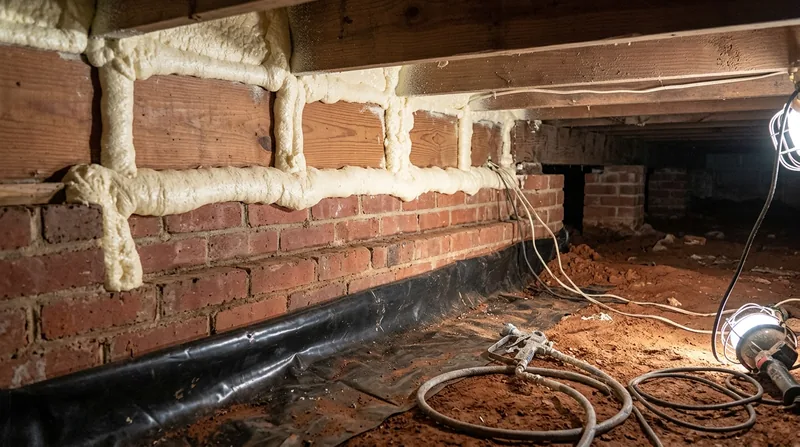




Top plates, can lights, chases, knee walls and attic hatches leak more cooled air than most walls combined. In Durham, where summers run 130 to 150 degrees in a vented attic and humidity drives every moisture decision, air sealing is the single most cost-effective comfort fix a homeowner can make before laying down another inch of insulation. We seal the leaks first, the step that makes every R-value actually perform. A Craftsman bungalow in Old West Durham or a ranch in Forest Hills loses as much conditioned air through unsealed penetrations as through an entire uninsulated wall cavity. Air sealing stops that waste, cuts your cooling load, and costs far less than replacing a failed attic or a damp crawl space. Call us at (984) 254-5400 for a free estimate, or read on to understand what leaks, why it matters, and how we fix it.
Why Air Sealing Matters More in Durham Than Most Places
Durham sits in the rolling Piedmont on red clay under a dense canopy of oaks and pines. Most homes sit on vented crawl spaces raised on brick piers or daylight basements on sloped lots, with an air handler and its ductwork in a vented attic that bakes through long humid summers. That attic is the leak point. Can lights, electrical boxes, plumbing chases, top plates, knee walls and attic hatches all open directly to the outdoors through soffit vents. In a sealed attic or a closed crawl space, those penetrations become the dominant air leak path. Sealing them before insulation means your R-value stays on the job instead of bleeding out through gaps and holes.
- We identify every major leak point in your attic, crawl space or wall cavity before foam goes down.
- We seal top plates, electrical and plumbing penetrations, can light housings and attic hatches with closed-cell foam or caulk.
- We verify the substrate is dry and clean before sealing anything, and we walk away if it is not.
- We document what we seal and what thickness we apply, so you own the record.
The result is an insulation system that actually meets its rated R-value, not a theoretical one. North Carolina's humid subtropical climate and the vented crawl space heritage of this region make air sealing the difference between a house that stays cool and one that sweats and smells in July.
Key info: A 1900s Craftsman in Trinity Park or a 1950s ranch in Lakewood loses cooled air through unsealed penetrations in the attic faster than a window left open. Air sealing is the first step we take before any insulation retrofit, and it is the step that most contractors skip. We do not.
For more on how insulation works in sealed attics, see our guide to attic spray foam insulation in Durham.
How We Air Seal Your Home: The Durham Process
Air sealing is not a single task. It is a sequence. We start with a visual inspection of your attic, crawl space or wall cavity to map the leak points. We look for gaps at the top plate where the wall meets the attic, holes around electrical boxes and can lights, unsealed chases for plumbing and HVAC, and gaps around the attic hatch. We photograph the work and note the R-value and thickness we apply at each point. Then we seal in the order that makes sense: worst leaks first, then the secondary penetrations, then the perimeter.
- We schedule a free on-site estimate and walk your attic or crawl space to identify all major leak points.
- We provide a written estimate with the specific areas we will seal, the method (closed-cell foam, caulk, or both), and the thickness per pass.
- We set up mechanical ventilation during any foam application and maintain it for the cure window.
- We seal the substrate dry, apply the material at the manufacturer ratio and drum temperature, and document the work with photos and notes.
- We observe a twenty-four to forty-eight hour re-entry window after foam cure before you return to the space.
The whole process is straightforward and transparent. We do not promise a perfect seal (no such thing exists), and we do not spray over wet, contaminated or leaking substrates. If the crawl space has standing water or the attic has an active roof leak, we fix the moisture first or we walk away.
Example: A 1920s Tudor in Hope Valley with a vented attic and original fiberglass typically has gaps at the top plate, around four to six can lights, an unsealed attic hatch, and a chase for the furnace flue. We seal all of them with closed-cell foam in a single day. The homeowner sees the work, understands the cost, and then benefits from the full R-value of whatever insulation sits on top. That is the Durham standard we hold.
For details on the spray foam systems we use for air sealing, see our page on closed-cell spray foam insulation.
Air Sealing Methods and Best Uses
| Approach | Description | Best for |
|---|---|---|
| Closed-cell foam | Two-pound polyurethane foam, 1.5 inch per pass, applied to fill gaps and create a complete seal around penetrations and top plates. | Attic top plates, electrical boxes, plumbing chases, can light housings, rim joists and any penetration in a humid climate where moisture control matters. |
| Open-cell foam | Half-pound polyurethane foam, softer and lower density, used for minor gaps and secondary penetrations where water vapor permeability is acceptable. | Interior wall cavities in dry climates or as a secondary seal after closed-cell is applied to the primary leak paths. |
| Caulk or sealant | Polyurethane or silicone caulk applied to small gaps, cracks and seams that do not require foam thickness. | Sealing gaps between rim joists and band boards, small cracks in the top plate, or finishing the edges of foam-sealed areas. |
| Injection foam into walls | Low-pressure injection of closed-cell foam into empty wall cavities of pre-1980 homes without removing drywall or siding. | Retrofit insulation and air sealing of solid-wood or brick walls in Old West Durham, Watts-Hillandale, and other heritage neighborhoods. |
Each method has its place. Closed-cell foam is the workhorse for attics and crawl spaces in Durham because it handles humidity and fills thick gaps in a single pass. Caulk is the right answer for small seams. Injection foam lets you insulate and seal a 1920s wall cavity without demolition. We choose the method that fits the job and the substrate, never the one that sounds most impressive.
Air Sealing Cost in Durham: What to Expect
Air sealing prices depend on the scope of the leak points, the access and the method. A small attic with three to four can lights and a sealed top plate runs from $650 to $900. A larger attic with multiple chases, a knee wall and an unsealed hatch can run $1,200 to $1,800. A full crawl space perimeter with rim joists and band joists runs higher. The biggest cost driver is the number of penetrations and how thick the foam needs to be to seal them completely. A house on a sloped lot in Chapel Hill might have more rim joist exposure than a ranch on flat ground in Cary, and that changes the estimate.
- We charge by the hour or by the job, depending on what the estimate reveals and what you prefer.
- We provide a written estimate before we start, with the specific areas we will seal and the method we will use.
- Travel is included in our estimate for Durham and surrounding areas, no separate mileage or call-out fee.
- We recommend getting two or three estimates from different contractors so you can compare scope, method and price.
The cheapest estimate is not always the best. A price far below market, no written scope, and a promise to re-enter the space immediately after foam application are the markers of a contractor cutting corners. We do not. For a full pricing overview and examples of recent jobs, see our pricing page.
Air Sealing Near Me: What to Look for When Hiring a Spray Foam Contractor in Durham
Air sealing is simple work, but it is easy to do poorly. A contractor who shows up with a spray gun and no inspection, no written estimate with R-value and thickness, and no plan for ventilation during cure is not an air sealing specialist. That is a rig-and-run crew. A good contractor, whether it is us or someone else, will walk your space, identify the leak points, explain the method, provide a written estimate with specifics, and document the work with photos and notes. Here is what to check before you hire.
- Verify that the contractor is fully insured and can provide a certificate of insurance on request.
- Ask for references and call at least two recent customers to ask if the work held up and if they felt the price was fair.
- Request a written estimate that names the specific areas to be sealed, the method (closed-cell foam, caulk, or both), and the thickness per pass.
- Confirm that the contractor will use mechanical ventilation during foam application and will observe a re-entry window of at least twenty-four hours.
- If your home is in a historic district or a HOA with architectural guidelines, ask if the contractor understands the rules and will work with your local building department.
- Check that the contractor is reachable by phone and email, and that they respond to estimate requests within twenty-four hours.
Durham and the surrounding Piedmont have a long history of good insulation work and a few contractors who cut corners. The difference is transparency and documentation. A contractor who walks your space, explains what leaks and why, provides a written estimate with specifics, and documents the work with photos is the one to hire. That is us. Call (984) 254-5400 for a free estimate, or visit our contact page to request one online.
Air Sealing in Durham: Pricing Guide
| Service | Price | Details |
|---|---|---|
| Small attic air sealing (3-4 penetrations) | Starting at $650 | Top plate sealing, can lights, and attic hatch closure with closed-cell foam in one day |
| Medium attic or crawl space perimeter | Starting at $1,200 | Multiple chases, knee walls, rim joists and band joists with closed-cell foam and caulk |
| Injection foam retrofit (wall cavities) | Starting at $1,500 | Low-pressure injection into empty cavities of pre-1980 homes, priced per linear foot of wall |
| Full crawl space or complex retrofit | On estimate | Scope includes moisture assessment, substrate preparation and multiple foam applications over several days |
| Travel and estimate | Included / Free | No mileage fee for Durham and surrounding areas; free written estimate with no obligation to book |
Indicative pricing, the exact cost depends on square footage, finish, and site access. Free personalized estimate within 24h at (984) 254-5400.


